- Home
- Ingredients
- Licorice Root
Licorice Root In GlycoAid
Fifty times sweeter than sugar by weight, and used as a digestive herb for millennia.
Where Licorice Root Comes From
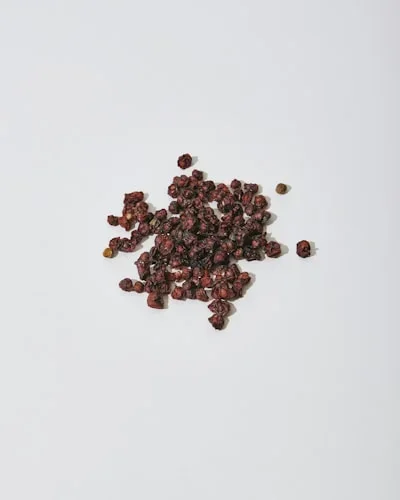
Licorice is the root of a legume, and it is roughly fifty times sweeter than sugar by weight because of a compound called glycyrrhizin. It has been used across Europe, the Middle East and China for thousands of years, mostly as a digestive and respiratory herb, and it turns up in an enormous share of traditional Chinese formulas as a harmonising ingredient that softens the others.
What Licorice Root Is Doing In GlycoAid
In this formula licorice sits on the digestive comfort and traditional support side rather than being a glucose driver. Flavonoids in the root have been examined for metabolic activity in laboratory work, and the root's long-standing role in soothing the gut is the more practical reason a blend of concentrated botanicals might include it.
The Research Behind Licorice Root
There is a reasonable body of work on licorice for digestive complaints, particularly the deglycyrrhizinated form. Evidence for blood glucose effects in humans is limited. What is not limited, and is unusually well documented for a botanical, is the safety ceiling described below.
What Dose The Studies Actually Used
Regulatory guidance has generally converged on glycyrrhizin intake below about 100 mg a day for sustained use, which is a specific figure of the sort most herbs never get. In a shared blend the amount present is small.
How this relates to GlycoAid. The fourteen ingredients share one 500 mg blend weight and no individual figure is printed, so what any single name contributes cannot be read off the label. The descending order on the panel is the one real clue, and this site would rather explain that than pretend to a precision it does not have.
Licorice Root: Cautions Worth Knowing
This is the ingredient on this panel with a genuinely documented ceiling, and it is worth reading properly. Glycyrrhizin inhibits an enzyme that normally protects the mineralocorticoid receptor from cortisol. The consequence at sustained intake is sodium retention, potassium loss and raised blood pressure — a picture called pseudohyperaldosteronism. There are well documented cases from heavy licorice confectionery consumption, not just supplements. Anyone with hypertension, kidney disease, heart failure or low potassium, and anyone taking a diuretic, should take this to a doctor before starting.
What Licorice Root Is Not
Licorice root and deglycyrrhizinated licorice, usually written DGL, are different products. DGL has the glycyrrhizin removed specifically to avoid the blood pressure effect. Licorice sweets in most of the English-speaking world contain anise flavouring rather than real licorice, which is why they carry none of this.
Finding Licorice Root Outside A Capsule
Real licorice root is sold as a tea and as chewing sticks, and it is genuinely sweet. Most licorice confectionery in the English-speaking world is flavoured with anise and contains no licorice root at all, which is why it carries none of the blood pressure issue. If you are buying licorice deliberately and have any blood pressure concern, deglycyrrhizinated licorice, sold as DGL, is the form with the glycyrrhizin taken out.
Questions
Licorice Root Questions
The ones that come up about this ingredient specifically.
Is the licorice in GlycoAid a problem?
In a shared 500 mg blend the amount is small. The caution matters most for anyone with hypertension, kidney disease or low potassium, or anyone taking a diuretic.
What is glycyrrhizin?
The sweet compound in licorice root, and the one responsible for both its taste and its blood pressure effect at sustained intake.
How much licorice is too much?
Guidance generally converges on keeping glycyrrhizin below about 100 mg daily for sustained use.
Is DGL the same thing?
No. Deglycyrrhizinated licorice has the glycyrrhizin removed precisely to avoid this issue.
Nearby
Related GlycoAid Ingredients
Start Your First Bottle Of GlycoAid
One capsule with a meal, a page here for every name on the label, and two months to send it back if it does nothing for you.
- One capsule a day, taken with food
- Fourteen ingredients, all named on the panel
- Free US delivery on the 3 and 6 bottle packs
- Sixty days to return it, opened bottles included