- Home
- Ingredients
- Bitter Melon
Bitter Melon In GlycoAid
A vegetable eaten daily across Asia, bitter enough that nobody eats it by accident.
Where Bitter Melon Comes From
Bitter melon is a climbing vine in the gourd family, grown across South Asia, Southeast Asia, China, Africa and the Caribbean. The fruit looks like a warty green cucumber and it is, as advertised, extremely bitter. It is eaten as a vegetable by hundreds of millions of people, which makes it one of the few ingredients on this panel that has a genuine dietary safety record rather than a supplemental one.
What Bitter Melon Is Doing In GlycoAid
The fruit contains several compounds of interest, including charantin, vicine and a polypeptide known as polypeptide-p, which has enough structural similarity to insulin that it was once called plant insulin. These appear to act on glucose uptake and on the enzymes involved in carbohydrate handling.
The Research Behind Bitter Melon
This is one of the more thoroughly studied botanicals in the category and the results genuinely disagree. Some trials find modest reductions in fasting glucose, others find nothing distinguishable from placebo, and reviews tend to conclude that the evidence is insufficient to recommend it while noting that it is not nothing either. Different preparations — juice, fruit powder, seed extract, standardised extract — are a large part of why the results scatter.
What Dose The Studies Actually Used
Trials have used anything from 2,000 to 3,000 mg of fruit extract a day, which is far more than a shared blend can hold. As with berberine, the honest reading is that a blend contributes the ingredient rather than a trial dose of it.
How this relates to GlycoAid. The fourteen ingredients share one 500 mg blend weight and no individual figure is printed, so what any single name contributes cannot be read off the label. The descending order on the panel is the one real clue, and this site would rather explain that than pretend to a precision it does not have.
Bitter Melon: Cautions Worth Knowing
Bitter melon can cause digestive upset, and along with berberine it is the second reason GlycoAid is taken with food. It should be avoided in pregnancy: the seeds in particular have traditional use as an abortifacient and there is enough animal data to take that seriously. Anyone on glucose-lowering medication needs the usual conversation.
What Bitter Melon Is Not
Bitter melon and bitter gourd and karela and momordica are all the same plant under different names. What is not the same is the preparation: a juice, a dried fruit powder and a standardised extract are three different products with three different concentrations, and a label that says only bitter melon has told you less than it appears to.
Finding Bitter Melon Outside A Capsule
This one is genuinely available as food. Bitter melon is sold fresh in most Asian and Caribbean grocers, and it is cooked with eggs, stuffed, stir-fried or juiced depending on where the recipe comes from. Anyone who wants the ingredient at a food-scale amount can simply eat it, and a great many people already do several times a week without thinking of it as a supplement at all.
Questions
Bitter Melon Questions
The ones that come up about this ingredient specifically.
Can I just eat bitter melon?
Yes, and a great many people do, several times a week. It is a normal vegetable across much of Asia and the Caribbean and it is genuinely bitter.
Is bitter melon safe in pregnancy?
No. Avoid it. The seeds have traditional abortifacient use and there is animal data supporting the concern.
Why do the bitter melon trials disagree?
Largely because they use different preparations at different concentrations while all calling the ingredient bitter melon.
Does bitter melon upset the stomach?
It can, in some people. Taking the capsule with a meal is the practical answer.
Nearby
Related GlycoAid Ingredients
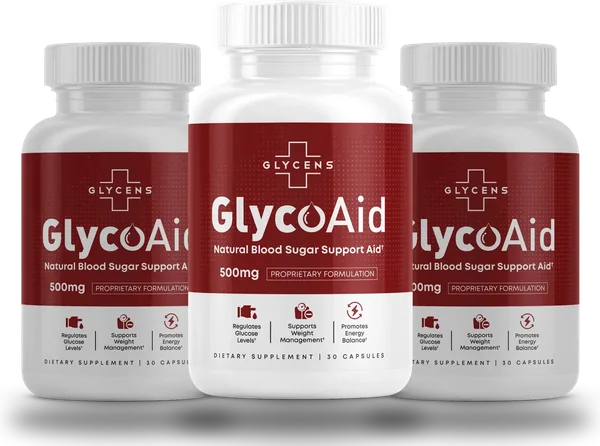
Start Your First Bottle Of GlycoAid
One capsule with a meal, a page here for every name on the label, and two months to send it back if it does nothing for you.
- One capsule a day, taken with food
- Fourteen ingredients, all named on the panel
- Free US delivery on the 3 and 6 bottle packs
- Sixty days to return it, opened bottles included